Showing posts with label architecture. Show all posts

Saturday, June 8, 2013

Dhaulagiri - Viswa Shanti Stupa


Had a few hours to kill before my flight from Bhubaneswar. So thought of stopping by Dhaulagiri. Dhaulagiri is a small hillock surrounded by plains, around 7 km from the State capital. Dhauli, as it is locally known, is believed to be the place where the famous (or rather infamous) Kalinga war was fought in 260 BC. Over 150,000 lives were lost in the bitter battle. It is said the waters of the nearby river Daya had turned blood red due to the merciless bloodbath.
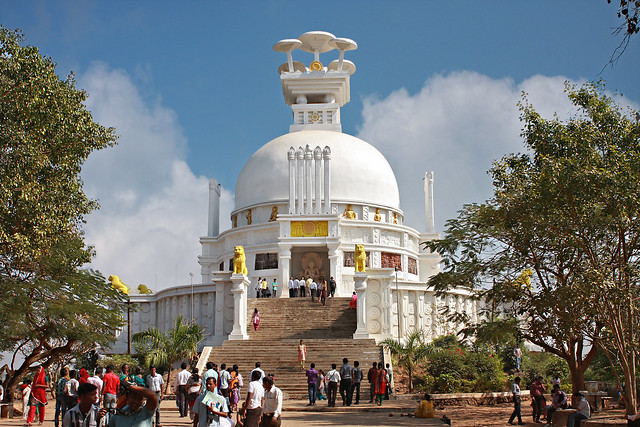
Dhaulagiri, Shanti Stupa, Buddha, Bhubaneswar, Odisha

Despite emerging victorious, the huge loss of life and suffering witnessed in the battlefield transformed King Ashoka from Chandashoka to Dharmashoka, from a tyrant ruler to a benevolent king. He renounced war forever by offering his sword at the feet of Lord Buddha. He embraced Buddhism and became one of its biggest proponents. The king had 84000 stupas built and sent them to places as far as distant Greece with peace messengers. Ashoka The Great is today remembered, among the other things, for his work in establishing peace among nations.
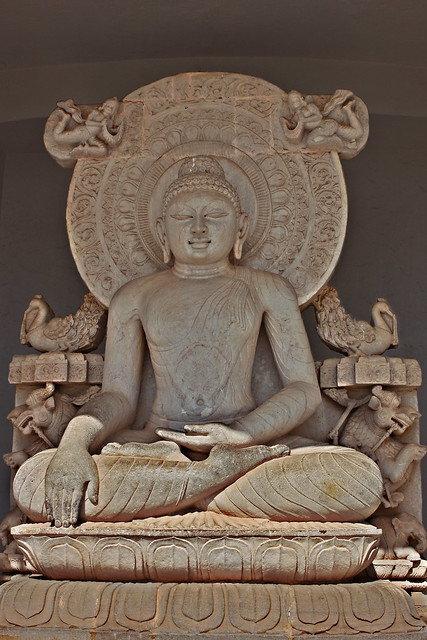
Buddha at Dhaulagiri, Shanti Stupa, Bhubaneswar, Odisha

A number of edicts of King Ashoka can be seen engraved on mass of rocks by the road side near the summit of the hill. The edicts are written in Prakrit language, the then language of the common masses, using the Brahmi script. In these edicts, Kind Ashoka has declared his doctrine of paternalism, accepting all men as his children, and urged the administrators to work for the welfare of the common man.
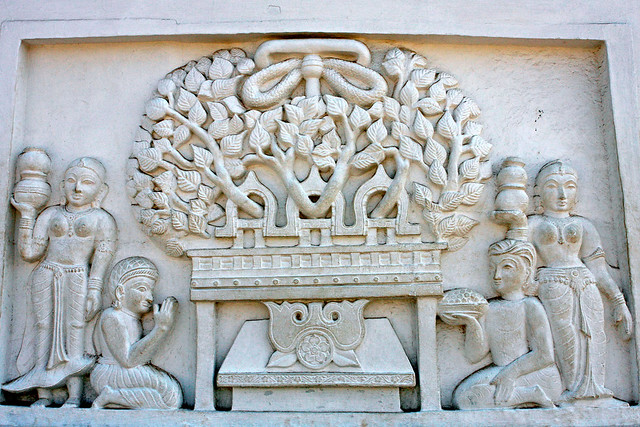
Sculpture, wall panel, Dhaulagiri, Bhubaneswar, Odisha, Bodhi Tree

The Shanti Stupa at Dhaulagiri, also known as the Peace Pagoda, is built at the summit of Dhauli hills. It is a dazzling white pagoda symbolizing world peace. The Shanti Stupa was built jointly by the Nipponzan Myohoji, a Japanese Buddhist Sangha founded by Nichidatsu Fujii or Fujii Guruji as he was called, and the Kalinga Nippon Buddha Sangha in 1972.

Sculpture, wall panel, Dhaulagiri, Bhubaneswar, Odisha, Buddha

The pagoda dome has five umbrellas at the top signifying five essential parts of Buddhism. The walls of the pagoda is adorned by beautiful stone panels which included the Bodhi Tree, an elephant procession and King Ashoka offering his sword in front of Lord Buddha.
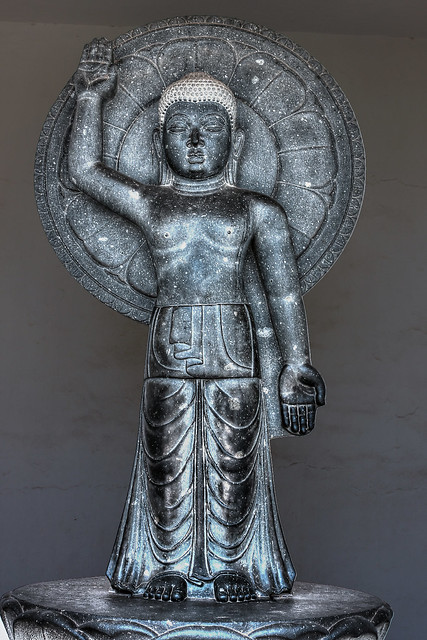
Buddha Statue, Dhaulagiri, Shanti Stupa, Bhubaneswar, Odisha

Saturday, June 1, 2013

A Mother's Mantle - St. Mary's Basilica


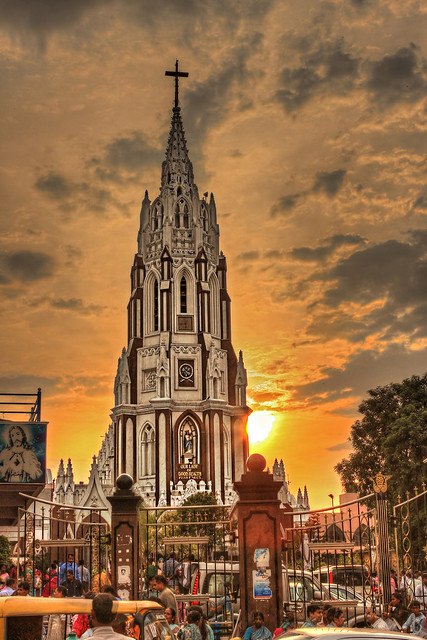
Last Sunday while roaming the crowded streets around Commercial Street in Bangalore, we chanced upon the St. Mary's Basilica. Amidst the chaos of Shivajinagar and the bustling Russel Market, the church appears like an oasis: a beautiful immaculate structure, the embodiment of peace and harmony. At twilight, the dipping sun created a nice golden glow in the sky as a backdrop to the church.

St. Mary's Basilica, Bangalore

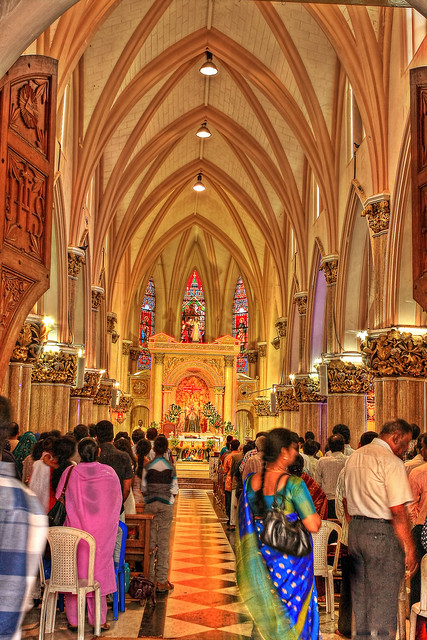
Built in Gothic style with stained glass windows, arches and ornamental motifs, the oldest church in the city, it was elevated to the status of a minor basilica in 1973. At present, it's the only basilica in the state of Karnataka and only the sixth in the country.

St. Mary's Basilica, Bangalore

The church was built from 1856 to 1882 and consecrated in September 1882. Dedicated to Mother Mary, it is famous for St. Mary's feast held every year in the month of September. The festivities, attended by thousands from in and around Bangalore across religions, goes on for 10 days culminating in a grand chariot procession on the last day. Looking forward to attending this festival this year.

St. Mary's Basilica

Monday, February 25, 2013

Golconda Fort - A Visit!


I was in Hyderabad last April for a friend's wedding. Being in Hyderabad, I couldn't forgo an opportunity of visiting Golconda Fort. My curiosity was piqued when I came to know many famous gems including the Kohinoor diamond were kept in the vaults of this fort. The head quarters of the Qutb Sahi dynasty, Golkonda fort is among the biggest and most famous fortresses of Southern India.

The Main Gate of Golconda Fort, Hyderabad, India

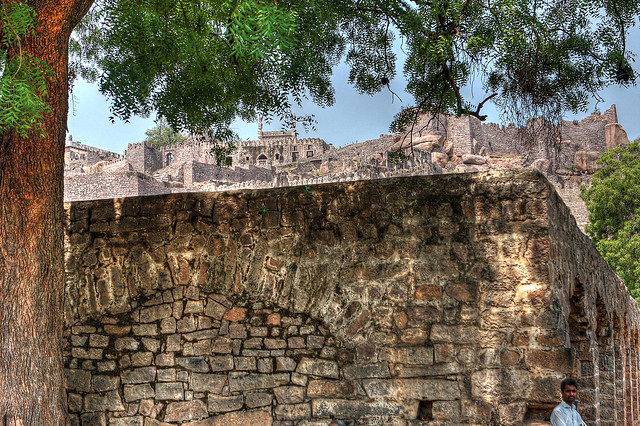
Easily one of the strongest forts of medieval India, it had three lines of powerful fortification walls with a deep trench surrounding the outer wall. The first line enclosed the town while the second, a double wall ran around the foot of the hill on which the citadel stood. The third line further up the wall is formed by connecting walls of masonry to natural boulders. The outer fortified wall, varying in thickness from 5m to 10m, has 8 gates - Fateh, Bahmani, Mecca, Patancheru, Banjara, Jamali, Naya Qula and Moti.

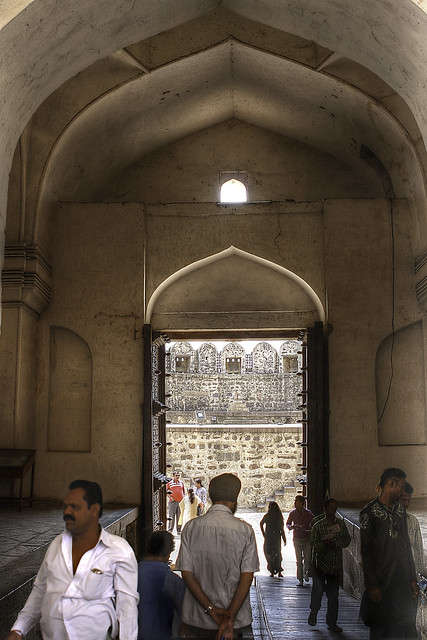
Inside view of the main gate at Golconda Fort, Hyderabad, India

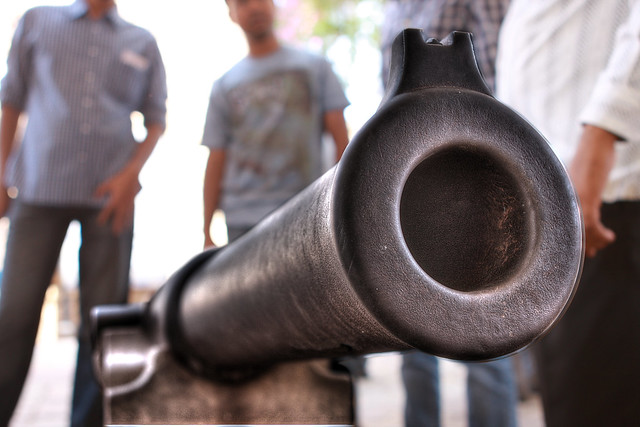
The outer wall is further strengthened by 87 large bastions present at short intervals. At various places, on the fortified wall, vents can be seen pointing downwards. Soldiers manning guns used to command the foot way immediately below. Teak doors covered with iron sheets and studded with sharp spikes protected the gates. Cannons were pointed at the gate entrance to deter invading enemy soldiers in case they managed to break the gates.

A cannon pointed at the main gate of Golconda Fort, Hyderabad, India

One of the most interesting aspects of Golconda Fort is the signalling system incorporated in its construction. The various edifices are so placed as to transmit sound to different far away points. If one claps standing at the centre of the entrance portal the sound is deflected by the opposite building which is constructed at an angle to the entrance. Similarly, sounds of hands clapped at the entry gate can be heard clearly at the hill top.

Another view of the Fort

Sunday, March 11, 2012

Epcot Gardens - Reflections of China

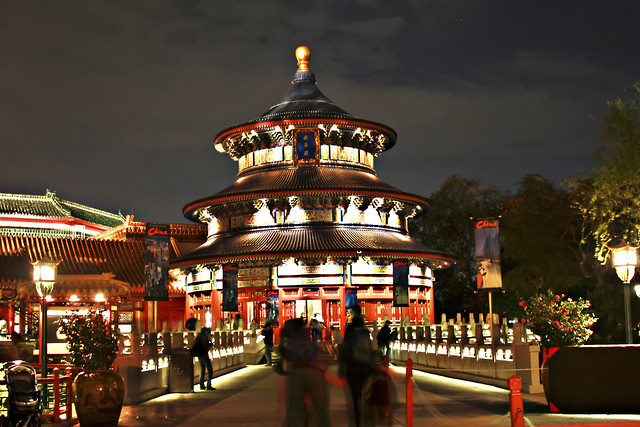
Epcot Garden

Diving into my archives to make a post before the weekend gets over. This was taken in Christmas 2010 in Epcot Gardens, Florida. The theme park has a section dedicated to different cultural influences from United States, Canada, Mexico, China, Japan, United Kingdom, France, Germany, Italy, Norway and Morocco.

In the China Pavilion, visitors can experience the art, architecture and traditions of China, one of the oldest civilizations in the world. Visitors can relax in serene gardens with tranquil reflecting ponds in the Temple of Heaven. Or they can discover authentic tomb sculptures from ancient China dating back 2,000 years.

Sunday, January 15, 2012

Samaleswari Temple

Over the past couple of months, I have visited several old temples trying to capture the beautiful sculptures and artwork which has always been associated with ancient temples in India. And its just natural that I start with my native place Sambalpur.

Jai Maa Samalai!!

Sambalpur has been named after its presiding deity Shree Shree Samaleswari. Samaleswari Temple is dedicated to the goddess, affectionately known as Maa Samalei. Maa means Mother in the local language. Maa Samaleswari has emerged as a strong religious force in western Odisha and Chhattisgarh states of India and has become the symbol of Sambalpuri culture.

The goddess has been worshipped on the bank of river Mahanadi since ancient times as Jagatjanani, Adishakti, Mahashakti and Bhuvaneshvari. The kingdom of Sambalpur was known as Hirakhanda in ancient times and had a rich cultural heritage. Ptolemy has described the place as Sambalaka on the left bank of river Manada, which is now known as Mahanadi. According to Jean-Baptiste Tavernier, a French traveller, and Edward Gibbon, an English historian, diamonds were exported to Rome from Sambalpur.

Guardian of the temple

The temple was built in the 16th century by Balaram Dev who ruled Sambalpur sometime between 1540 AD and 1557 AD. It is built from a kind of stone as durable as granite and cemented with lime mortar. The whole building is plastered, but in the course of time the surface has become mouldy.

According to folklore, one day Balaram Dev crossed the river Mahanadi to go hunting with his hounds. While hunting, he noticed something strange. He saw his hounds running away for dear life. And chasing them was a rabbit. Balaram Dev was stunned. Later, he noticed the rabbit return to the foot of a huge Simili (cotton) tree on the left bank of Mahanadi. The same night, he had a strange dream. Goddess Samaleswari appeared in his dream and ordered him to establish her at the foot of the Simili tree and build a temple. The next morning Balaram Dev made up his mind and established his fort on the left bank of river Mahanadi. He installed the goddess Samaleswari under the Simili tree and built a temple. Sambalpur was a small village at that time. Some historians believe the idol of the goddess Samaleswari under the Simili tree was worshipped by tribals from the 3rd century A.D. until the temple was built by Balaram Dev.

In the late 16th century Kalapahad, the general of the King of Bengal, attacked Odisha and killed the last Hindu king, Gajapati Mukunda Dev. He ravaged some of the famous temples of Midnapore, the Khirachora Gopinath temple of Balasore, the Khiching temple of Mayurbhanj, Konark temple, Puri temple, the temples of Bhubaneswar, Jajpur and Cuttack. Then he attacked Sambalpur. The legend goes that Kalapahad was defeated due to Maa Samaleswari. Kalapahad's tomb and those of his soldiers could be seen on the outskirts of the city. But now the city has grown and the this little piece of history is lost.

Monday, September 12, 2011

Bus Trip from Chennai to Bangalore

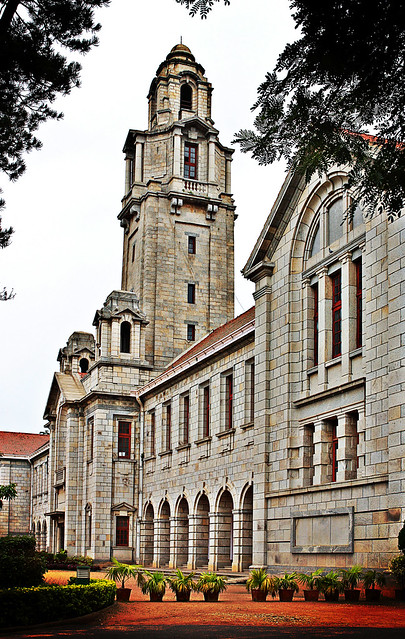
Bangalore is not too far from Chennai. A little more than 200 kms and hardly 7 hrs by bus. With most of my friends based out of the city, it was logical I head out there for a 5 day break. I was visiting a friend in Indian Institue of Science (IISc). IISc is one of the premier institutes of higher education in the country, located in the beautiful city of Bangalore, and I was looking forward to my stay in a college campus after almost 6 years.

IISc

Now, I am not much into planning. I had run into issues the last time I attempted the trip. So, after some admonishing from my friend, I went ahead and made advance reservation for the 11:00 pm bus. The bus was starting from CMBT bus station which is located in Koyambedu. Residing in Mahindra World City, I needed atleast 1.5 hrs to reach Koyambedu. Mahindra World City is supposed to be a part of Chennai but is actually 50 kms outside the city.

Time 9:00 pm. I had a good dinner and then went to get a printout of the ticket. Old habits die hard. I had made online reservation but put off on taking a printout of the ticket till the last minute. Anyway, I fired a print and then stood intently staring at the printer, willing it to print ASAP. Couple of minutes passed. I realized something must be wrong. It doesn't take this long to print a ticket. Is that a light blinking? Darn! No paper. I hurried to check the remaining trays. As luck would have it, not only the trays, but even the spare paper stacks stored near the printer were empty.

Time 9:45 pm. I should have started 15 mins back. Nary a worry. I am usually lucky and tend to be bullish about it. I was confident I will be able to make it to the bus station on time. And the PNR number in the SMS sent by the booking service will have to do for a ticket. Making up my mind, I went back to the Guest House, collected my luggage and started off. Almost immediately got an auto-rickshaw, reassured that Lady Luck was with me. The auto let me off at the main gates of Mahindra World City. Long distance buses frequent this route. I was hopeful of flagging one and hitching a ride to the main bus station in Koyambedu.

Buses were frequent. I got that much right. But none seemed to want to stop for me. A few minutes later, it started raining. There I stood by the road side, somewhat drenched, but still in high spirits. Time for another timecheck. It's 10:00 pm. Seems a bit difficult to reach the station on time. Nary a worry. I have the bus contact number. All I need to do is call the number, rant a few excuses and get a seat for the next bus. Darn! Number temporarily disconnected. Tough luck.

All cockiness gone, I reassessed my situation. The last bus for the service I had opted for was at mid-night. So I could still get a bus if I reached the station. I could take a local bus till Tambaram and then catch one of the long distance bus from there to Koyambedu. Reached Tambaram in 15 minutes. After waiting for 10 minutes, caught a bus going to Koyambedu. The conductor assured me we should reach the station in 45 minutes. As it turned out, it was much longer than that. By the time I got off at the main bus station, it was 12:15 am.

I hurried inside, inquiring for the bus terminus to Bangalore. Following directions, I reached a platform. Looking around I felt something amiss. Where are the counters of the bus service providers? Am I at the correct terminal? I turned to the person next to me and made some inquiries. Communication in Chennai is a bit difficult, given that I don't know the local language and many localites speak somewhat less than passable English. Somehow I managed to get a few answers. I gathered there are two bus terminuses - Government and Private. I was at the Government Bus Station. My bus was supposed to be at the Private Bus Station. Now why didn't I know that?

Anyway, started walking in the direction towards which the gentleman pointed his finger, stopping and confirming the route from passerbys on several occasions. Finally reached a place that didn't at all resemble a bus station. But it was! I found someone in my bus provider's counter and dunned him nice and proper. The fact that I didn't have a ticket never even came up, he was totally to be blamed. How dare he not have a valid phone number on the ticket? By the time I was done, the poor guy was really miserable and I started feeling sorry for him. There were no more buses of the service. So he tried with the affiliated service providers for any available seats. Unfortunately, all were booked. So I bid adieu after thanking him and went back to the Government bus station.

To my good fortune, I was just in time to catch a KSRTC AC bus which had a seat available. Completely tired by now, I fell asleep almost as soon as I boarded the bus. I wasn't up till 7:30 am. And we were in Bangalore. I have learnt my lesson - Planned Trips, no more!!

Sunday, September 11, 2011

Inside the Basilica!!

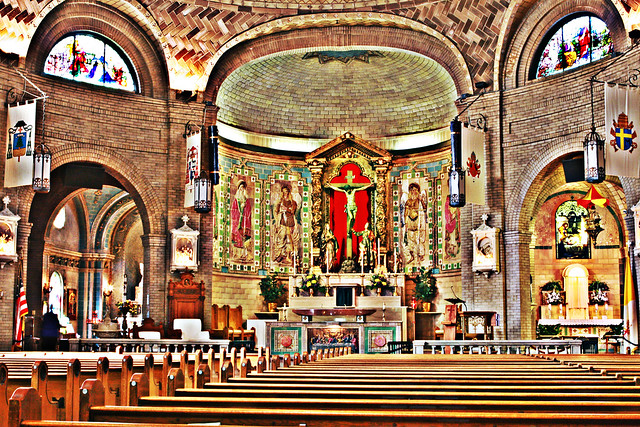
Another one of my old pictures. This one was taken inside the Basilica of St. Lawrence, Asheville, NC. In a previous post, I have mentioned about this beautiful minor basilica of the Roman Catholic Church.


It was quite a visit and still gives me the jitters. It was my first visit to a church when I carried along a tripod. And I was kind of wary of the looks I might get from other patrons. Fortunately, there were very few people around when I entered the church. The priest was a very nice man and just smiled down benevolently at me. Inside the church, Ela and I spent some time at the altar and then went around admiring the beautiful stained glass windows and other artifacts.

Apart from the well-known stained glass windows, the inside of the church is also adorned with exquisite statues of saints imported from Italy. These include St. Lawrence, St. Cecilia, St. Rose of Lima, St. Patrick, and St. Peter the Apostle. The high altar is made from marble and is decorated by a fresco painting of the Last Supper. Above the high altar in the sanctuary, there is a Spanish wood carving of the Blessed Virgin Mary and St. John, the Beloved Disciple, mourning at the Crucifixion of Christ. Behind the wood carving are polychrome terra cotta ornamental partitions of the Four Evangelists and two of the Archangels, St. Raphael and St. Michael.

After completing a round, I then started setting up my tripod to take a few pictures of the interior, the beautiful dome and the stained glass windows. For some reason, the tripod decided to give me a bad time. It was making awful noises that seemed to reverberate in the silent building. It reminded me of the sound you hear sometimes during change of gears in heavy vehicles like tractors and trucks. Couple of patrons turned around to look at me. Ela inched away and kept as much distance as possible from me giving an impression that he wasn't with me. Feeling very conscious, I continued with my work and finally managed to set up the tripod with my camera on top. I breathed a sigh of relief!!

I focused on one of the glass windows, made some adjustments and then pressed the shutter. And immediately almost jumped out of my skin. The shutter sound was magnified multifold and sounded like shots from a gun. I realized, I had set it up to automatically take 3 pictures at different exposures. In the silence of the church, it sounded like the staccato fire of a machine gun. Gulping down, trying to give the appearance of a diligent photographer, I turned the camera to capture a few more pictures before silently exiting the building with Ela following me at a discreet distance. Phew!!

Saturday, August 13, 2011

Basilica of St. Lawrence

The Basilica of St. Lawrence is a beautiful Roman Catholic Church in Asheville, NC. Built in 1905, this is the only basilica in Western North Carolina. It is reputed to have the largest free standing elliptical dome in North America. The interior of the church is exquisite with a lot of marble and wood work. However, it is best known for the elaborate stained glass windows which were made in Munich, Germany.


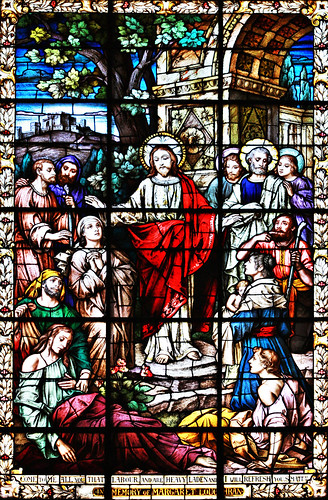
There are ten semi-circular windows, just under the dome, depicting scenes representing The Annunciation, The Visitation, The Nativity, The Child Jesus Teaching in the Temple, The conversion of St. Paul, The Marriage Feast at Cana, Raising to Life the Daughter of Jairus, The Calming of the Wind and Waves, The Agony in the Garden, and The Appearance of the Risen Savior to Mary Magdalene. The two large windows on the left and right walls represent Christ Healing the Afflicted and The Transfiguration. The large window in the organ loft portrays the Resurrection. There are couple of lower windows depicting St. Paul and St. Peter as subjects. Smaller windows above commenorate the four Fathers of the early church and the four Evangelists.
Related Posts Plugin for WordPress, Blogger...
 
Creative Commons License
Tryst with the Shutter Bug by Ramakant Pradhan is licensed under a Creative Commons Attribution-Noncommercial-Share Alike 3.0 United States License.